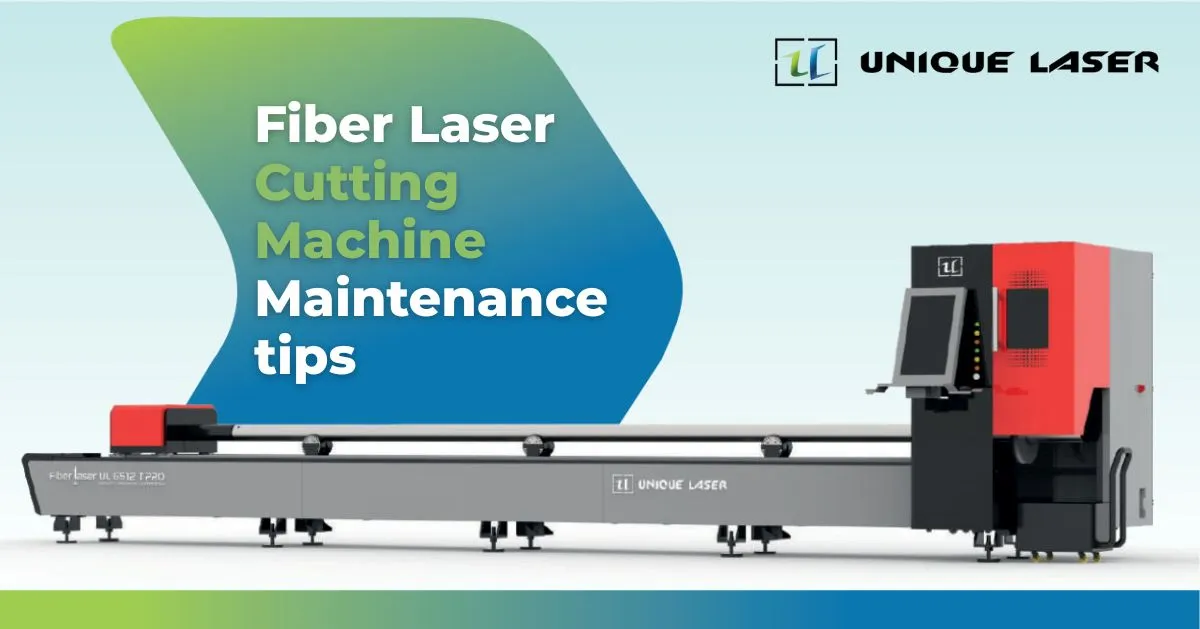
Regular maintenance is the key to keeping laser machines running smoothly, delivering accurate cutting results, and avoiding costly downtime. In industrial production, even a small issue like a dirty lens or blocked filter can affect cutting quality and reduce efficiency. That is why following proper Fiber Laser Cutting Machine maintenance tips is essential for manufacturers who want consistent performance, longer machine life, and reduced service costs. Just like a Fiber Laser Pipe Cutting Machine, every fiber laser system requires routine checks, cleaning, and preventive maintenance to ensure stable output.
In this blog, you will learn why maintenance is important, which machine parts need attention, daily/weekly/monthly maintenance tips, a checklist table, troubleshooting guidance, and best practices to extend machine lifespan.
Why Fiber Laser Cutting Machine Maintenance is Important?
Proper maintenance improves machine efficiency, prevents sudden breakdowns, and keeps cutting quality stable for every job. If maintenance is ignored, contamination and wear may build up, leading to burr formation, incomplete cutting, and frequent alarms. Like a Fiber Laser Pipe Cutting Machine, a fiber laser cutting system performs best when cleaning and inspection routines are followed regularly. Maintenance also helps avoid expensive repairs and reduces the chance of stopping production at critical deadlines.
Key benefits of regular maintenance include:
- Prevents unexpected machine downtime
- Maintains cutting accuracy and consistency
- Improves cutting speed and edge quality
- Reduces operating cost and repair expenses
- Increases overall machine lifespan
Key Parts That Need Regular Maintenance
To keep cutting quality stable, the most important machine parts must be cleaned and inspected regularly. The cutting system includes multiple components that affect performance, and like a Fiber Laser Pipe Cutting Machine, each component plays a role in accuracy, speed, and stability. When one part is neglected, it can affect overall output and reduce reliability.
Laser Cutting Head
The cutting head controls cutting stability, edge finish, and accuracy. If the head is dirty or misaligned, cutting output becomes inconsistent. Regular head inspection like in a Fiber Laser Pipe Cutting Machine helps avoid collision errors, rough edges, and unexpected shutdown warnings. A stable cutting head ensures smooth production performance across different materials and thickness ranges.
Maintenance tasks include:
- Inspecting focus lens condition for dust, scratches, or burn marks
- Checking nozzle alignment and ensuring proper fitting
- Cleaning sensor areas to avoid collision alarms or error warnings
- Verifying cutting head distance settings for stable and accurate cutting output
- Inspecting cutting head body for smoke buildup or metal particle contamination
- Checking nozzle hole blockage to maintain smooth gas flow and edge quality
Protective Lens
The protective lens prevents dust, smoke, and molten particles from reaching internal optics. When the protective lens becomes dirty, beam power reduces and cutting may become inconsistent. By following a cleaning routine like a Fiber Laser Pipe Cutting Machine, you can maintain beam quality and reduce cutting defects like burr formation. Protective lens cleanliness also improves cutting stability during long working hours.
Maintenance includes:
- Cleaning the lens using proper wipes
- Checking scratches or burn marks
- Replacing lens when required
Nozzle & Ceramic Ring
Nozzles and ceramic rings play a major role in gas flow and cut edge quality. If blocked or damaged, cutting will not be clean. Like a Fiber Laser Pipe Cutting Machine, clean gas flow improves accuracy.
Maintenance includes:
- Cleaning nozzle holes
- Checking nozzle wear
- Inspecting ceramic ring cracks
Chiller / Cooling System
Cooling system performance is critical because laser cutting generates heat during continuous operation. If cooling is unstable, overheating may occur and production stops with alarm signals. Cooling maintenance in a Fiber Laser Pipe Cutting Machine is essential, and the same applies to all fiber laser cutting systems for stable long-term output. Proper chiller care ensures cutting continues smoothly in long shifts.
Maintenance includes:
- Checking water level
- Monitoring temperature stability
- Cleaning chiller filters
- Replacing coolant periodically
Air / Gas System
Clean air and correct gas pressure support smooth cutting and reduce burr formation. Moisture in air filters can damage optical parts and reduce cutting quality. Similar to a Fiber Laser Pipe Cutting Machine, the assist gas and air system must be checked regularly to maintain stable performance. Gas leakage or unstable pressure can lead to poor finish and incomplete cutting.
Maintenance includes:
- Checking pressure settings
- Draining moisture from filters
- Inspecting air leakage
- Maintaining filter cleanliness
Exhaust / Dust Removal System
Laser cutting creates smoke and metal dust, which can contaminate machine parts and reduce safety. If exhaust filters are clogged, dust builds up inside the cutting area, affecting lens and head cleanliness. A proper exhaust system is important, and Fiber Laser Pipe Cutting Machine maintenance routines also focus heavily on fume extraction for stable output. Regular exhaust cleaning keeps the work area clean and improves optics life.
Maintenance includes:
- Cleaning exhaust filters
- Checking fume extraction performance
- Ensuring airflow is stable
Need help creating a maintenance schedule for your laser cutting machine?
Contact Us now to get professional tips and service assistance.
Daily Maintenance Tips
Daily checks help prevent common cutting issues and keep performance stable during continuous working. To ensure consistent output, daily inspection is necessary, especially in high production environments like a Fiber Laser Pipe Cutting Machine setup. Even small maintenance steps can reduce breakdown risk and protect optics.
Daily maintenance checklist:
- Clean nozzle and protective lens to prevent beam blockage and ensure smooth assist gas flow for clean edge finish.
- Check gas pressure and air settings to maintain stable cutting quality and avoid burr formation due to uneven gas flow.
- Drain water from air filter/moisture trap because moisture can damage optics and reduce cutting stability over time.
- Check chiller temperature and water level to ensure cooling performance remains stable and overheating alarms are avoided.
- Remove dust from cutting area and machine bed to prevent contamination buildup and maintain a clean working environment.
- Inspect cutting head condition visually to check for smoke marks, lens contamination, nozzle wear, or loose fittings before production starts.
- Check cables and connectors near the cutting head to ensure there is no dust buildup or loose connections that may cause interruptions.
Weekly Maintenance Tips
Weekly maintenance helps prevent long-term wear and ensures stable cutting performance. Like a Fiber Laser Pipe Cutting Machine, weekly checks improve reliability and reduce error chances during production. Weekly tasks include deep cleaning and inspection of key systems.
Weekly maintenance tasks:
- Deep clean nozzle and cutting head area to remove dust, smoke residue, and metal particles that can affect cutting accuracy and gas flow.
- Inspect protective lens and replace if needed to prevent beam power loss, poor edge finish, burr formation, or incomplete cutting issues.
- Clean exhaust filters and check airflow to maintain proper fume extraction, reduce dust buildup, and keep the cutting area safe and clean.
- Inspect cables, connectors, and pipe holders to ensure stable connections, prevent signal interruptions, and maintain proper alignment during operation.
- Check machine lubrication points to reduce friction, ensure smooth movement, and prevent mechanical wear in moving components.
- Inspect gas pipe connections for leakage to avoid pressure drop, unstable assist gas flow, and inconsistent cutting output.
- Check nozzle condition and alignment to ensure the nozzle is not worn, blocked, or loose, which may lead to rough cutting or uneven edge quality.
Monthly Maintenance Tips
Monthly maintenance is recommended to reduce major breakdown risks and improve long-term machine efficiency. Over time, filters clog, water quality reduces, and dust build-up affects performance. Like a Fiber Laser Pipe Cutting Machine, regular deep maintenance ensures stable production output.
Monthly maintenance includes:
- Replace filters if required to maintain clean airflow, stable gas quality, and prevent dust contamination inside machine systems.
- Inspect cooling water quality to ensure the coolant is clean and free from impurities that can reduce cooling efficiency or cause overheating issues.
- Clean chiller system and check flow to ensure smooth water circulation, stable temperature control, and prevention of chiller alarms during continuous operation.
- Check laser source working environment to ensure proper ventilation, dust-free surroundings, and stable operating conditions for long-term laser performance.
- Perform calibration and inspection checks to maintain cutting accuracy, stable focus performance, and repeatable output across different cutting jobs.
- Inspect mechanical wear points and tighten connections to prevent vibration, loose fittings, movement instability, and long-term mechanical damage.
- Check air/gas pipeline condition and clean regulators to ensure stable assist gas flow, correct pressure performance, and consistent edge finish quality.
- Inspect electrical connections and control cabinet cleanliness to avoid dust buildup, loose wiring issues, and unexpected interruptions during production.
Daily vs Weekly vs Monthly Checklist
A checklist table makes maintenance easier by helping operators follow scheduled tasks consistently. For stable long-term performance, this table is useful for every fiber laser machine, including a Fiber Laser Pipe Cutting Machine.
| Maintenance Task | Daily | Weekly | Monthly |
| Nozzle cleaning | Yes | Yes | Yes |
| Lens cleaning | Yes | Yes | Yes |
| Chiller check | Yes | Yes | Yes |
| Air filter draining | Yes | Yes | Yes |
| Exhaust filter cleaning | No | Yes | Yes |
| Cooling water replacement | No | No | Yes |
| Full machine inspection | No | No | Yes |
Common Fiber Laser Cutting Machine Problems & Solutions
Many problems occur due to poor cleaning, incorrect settings, or lack of inspection. With proper maintenance, most issues can be avoided. Similar to a Fiber Laser Pipe Cutting Machine, troubleshooting becomes easier when problems are detected early.
Common issues and solutions:
- Burr formation → clean nozzle, check gas pressure, reduce cutting speed
- Incomplete cutting → check lens cleanliness, verify focus settings, reduce speed
- Poor edge finish → inspect nozzle wear, gas flow stability, and lens condition
- Cutting head collision warnings → check sensor condition and cutting head distance
- Chiller alarms → check water level, filter blockage, temperature stability
Best Practices to Extend Machine Life
Following best practices improves machine performance and reduces long-term repair cost. Even the best machines require disciplined maintenance routines. Like a Fiber Laser Pipe Cutting Machine, stable operation depends on proper usage and environment control.
Best practices include:
- Use correct assist gas and pressure settings
- Always use proper lens cleaning materials
- Keep the working environment dust-free
- Train operators on daily maintenance steps
- Follow maintenance schedule without skipping
- Maintain proper exhaust ventilation
Frequently Asked Questions
Daily cleaning, weekly inspection, and monthly deep maintenance are recommended to maintain stable performance.
Nozzle cleaning, lens cleaning, chiller inspection, air filter draining, and exhaust filter maintenance are the most important tasks.
Use lint-free wipes and proper lens cleaning solution to avoid scratches and contamination.
Ignoring maintenance can cause burr formation, poor cutting quality, frequent alarms, breakdowns, and higher service cost.
Chiller alarms occur due to low water level, blocked filters, temperature issues, or poor coolant quality.
Conclusion
Maintenance is not an extra activity—it is an essential requirement for quality production and long machine life. By following proper daily, weekly, and monthly routines, you can reduce downtime, improve cutting quality, and avoid costly repairs. Similar to a Fiber Laser Pipe Cutting Machine, consistent maintenance ensures stable performance and smooth operations in industrial fabrication. If you follow these fiber laser cutting machine maintenance tips, your machine will deliver reliable output, consistent edge quality, and higher productivity for years.