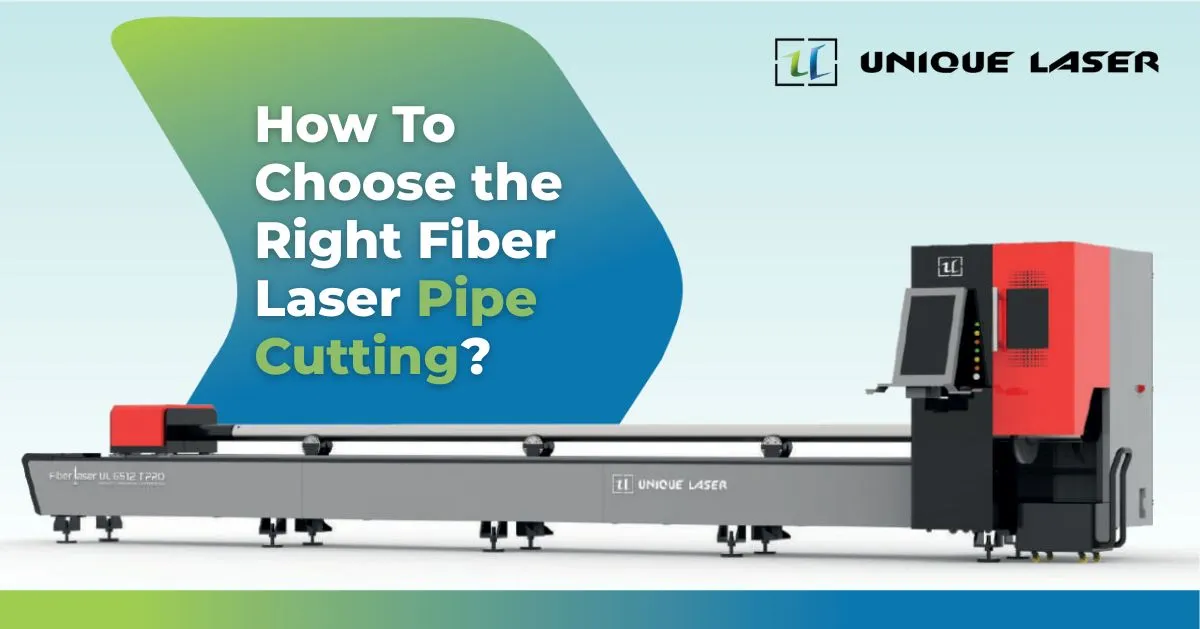
Choosing the right Fiber Laser Pipe Cutting Machine is one of the most important decisions for manufacturers who want faster pipe fabrication, consistent quality, and long-term production growth.
With increasing demand for accurate tube processing in industries like construction, furniture, automotive, and metal fabrication, laser pipe cutting machines are now widely preferred over traditional cutting methods. However, selecting the right machine is not only about buying the highest power—it requires understanding materials, pipe sizes, automation level, and total operating cost.
What is a Fiber Laser Pipe Cutting Machine?
A Fiber Laser Pipe Cutting Machine is a modern industrial cutting system that uses a fiber laser beam to cut metal pipes and tubes with high accuracy and speed.
This machine is commonly used for laser pipe cutting, tube laser cutting, and steel pipe laser cutting because it produces clean edges, minimal burr, and repeatable output. It supports multiple pipe shapes such as:
- Round pipes
- Square tubes
- Rectangular tubes
- Oval and special-profile pipes
Compared to conventional pipe cutting, a fiber laser cutting machine reduces scrap, improves finish quality, and increases production efficiency.
Key Factors to Consider Before Buying
Before investing, Fiber Laser Pipe Cutting Machine selection should always match your fabrication requirements, production volume, and future expansion plans.
Many buyers select machines based only on price, but the right machine should deliver consistent performance, supported service, and faster return on investment. Below are the most important factors you should consider before final purchase.
Material Type You Cut Most
Every fabrication business has a different metal processing requirement. Some workshops mostly cut mild steel pipes, while others may work heavily with stainless steel, or mixed materials. For best results, the Fiber Laser Pipe Cutting Machine should be selected based on the material you cut daily, because cutting speed, assist gas selection, and required power differ from metal to metal.
Common materials include:
- Mild steel (MS) pipes
- Stainless steel (SS) tubes
- Carbon steel pipes
- Brass and copper pipes
If your work involves stainless steel, edge finish quality becomes extremely important, so selecting the right configuration and settings becomes necessary.
Maximum Pipe Diameter and Length Requirement
Pipe size capacity plays a major role because it determines what kind of jobs you can handle. If you buy a machine that supports only smaller pipe sizes, you may lose larger projects or need outsourcing. For correct selection, the Fiber Laser Pipe Cutting Machine must support the diameter and length range used in your industry.
Check:
- Minimum and maximum pipe diameter
- Maximum pipe cutting length
- Support for long pipes (to avoid bending and vibration)
- Handling of heavy pipes and thick-wall pipes
If your work includes large structural pipes, you must ensure the machine has stable clamping and support features.
Cutting Thickness and Laser Power Selection
Laser power is the most searched factor in a buying decision because it directly impacts thickness capability and cutting speed. For best performance, the Fiber Laser Pipe Cutting Machine power should match your required thickness range.
General power selection guide:
- 1kW–2kW: thin to light fabrication
- 3kW: medium fabrication and job work
- 6kW: industrial production and heavy cutting
- 8kW–12kW: thick pipes + high-speed output
If your work includes thick pipes or you want faster production speed, selecting a higher power model can be a smarter long-term decision.
Pipe Shapes and Profiles Supported
Not all machines support all profiles. Some are designed mainly for round pipes, while others can cut complex structures. For best flexibility, the Fiber Laser Pipe Cutting Machine should support the pipe shapes you use in production, such as:
- Round, square, and rectangular pipes
- Oval pipes
- Structural profiles (angle, channel, or special sections if required)
This factor is very important for furniture manufacturing, structural fabrication, and custom engineering projects.
Confused about selecting the right laser pipe cutting system for your needs?
Contact Us today for expert guidance and the best machine recommendation.
Production Volume and Automation Level
Your required production volume decides whether you need a basic machine or an automation-ready model. For high output factories, the Fiber Laser Pipe Cutting Machine should support automation features such as:
- Automatic loading system
- Automatic unloading system
- Part sorting and collection
- Continuous operation support
If you run job work, manual loading may be enough. But for mass production, automation greatly reduces labor cost and production time.
Cutting Accuracy and Edge Quality
Many buyers focus on speed, but accuracy and finishing quality often decide long-term performance. A high-quality Fiber Laser Pipe Cutting Machine should deliver:
- Minimal burr formation
- Smooth and clean cutting edges
- Accurate holes and slot positions
- Consistent repeatable output
Better edge quality reduces secondary finishing processes and improves welding and assembly fitment.
Software and Ease of Operation
Machine usability impacts productivity. If the operator setup is difficult, it increases errors and production delays. The Fiber Laser Pipe Cutting Machine should have:
- Easy design upload support
- Quick job setup
- Nesting optimization
- Simple interface for operators
A user-friendly control system reduces training time and improves daily efficiency.
Maintenance and Operating Cost
A machine is not only about purchase price—it is also about long-term operating expenses. Before selecting, calculate the overall cost of the Fiber Laser Pipe Cutting Machine, including:
- Electricity consumption
- Assist gas usage
- Lens and nozzle maintenance
- Spare parts availability
- Service support and response time
Machines with stable performance and low maintenance reduce downtime and provide better production continuity.
Recommended Laser Power Guide
The right Fiber Laser Pipe Cutting Machine power selection depends on material thickness, production speed, and industry requirement.
| Laser Power | Best For | Typical Use Case |
| 1kW–2kW | Thin pipes | light fabrication, furniture frames |
| 3kW | Medium thickness | job work, general workshops |
| 6kW | Industrial production | automotive parts, structural fabrication |
| 8kW–12kW | Thick pipes + high speed | heavy engineering, export production |
Fiber Laser Pipe Cutting Machine Price Factors
Understanding pricing helps you compare machines correctly. The Fiber Laser Pipe Cutting Machine price depends on multiple technical and configuration factors, such as:
- Laser power level (higher power = higher cost)
- Pipe diameter and length capacity
- Automation level (loading/unloading systems)
- Machine build quality and frame stability
- Cutting head quality and focusing system
- Warranty, service support, and spare availability
Instead of selecting the cheapest option, focus on the machine that delivers lower running cost, stable output, and better production value.
How to Check Machine Quality Before Final Purchase
Live testing and evaluation are important before purchase. During demo, the Fiber Laser Pipe Cutting Machine should be checked using your actual material samples.
Checklist for quality testing:
- Cutting speed on your pipe material
- Edge finish quality and burr level
- Straight cut and angle cut accuracy
- Hole and slot alignment precision
- Stability during long pipe cutting
- Repeatability for repeated jobs
A proper demo helps avoid wrong machine selection and ensures confidence in production quality.
Industries and Applications That Need the Right Machine
Different industries have different fabrication requirements. That is why the Fiber Laser Pipe Cutting Machine should match the industry-specific needs, such as:
- Construction and infrastructure fabrication
- Furniture and modular frame production
- Automotive and engineering components
- Fitness equipment manufacturing
- Metal fabrication workshops and job shops
Choosing the right machine ensures better fitment, cleaner joints, and improved productivity for industrial applications.
Common Buying Mistakes to Avoid
Many buyers face production issues because of wrong selection. To avoid future loss, make sure the Fiber Laser Pipe Cutting Machine is selected with correct specifications.
Selecting low power without future planning
Many buyers choose lower power to save money initially, but later face limitations when thicker pipe jobs or higher output is required. If future expansion is expected, a Fiber Laser Pipe Cutting Machine should be selected with power capacity that supports thicker materials and faster cutting speed.
Ignoring maximum pipe length and diameter needs
Pipe capacity is one of the most important selection factors. If your business later receives orders for longer pipes or larger diameters, the machine may not support those sizes. This can result in project rejection or outsourcing, increasing cost and reducing profit margin. Confirm maximum diameter, pipe length capacity, and long-pipe handling stability before purchasing.
Not checking automation requirements
Manual loading may be fine for small job work, but high production requires automation. Without automation, labor cost increases and production becomes slower. A modern Fiber Laser Pipe Cutting Machine should be chosen based on production volume with correct loading, unloading, and part handling features.
Choosing a machine without service support
Strong technical support is essential for industrial laser machines. If service engineers are not available nearby or response time is slow, small issues can cause big production delays. Always confirm technical support, installation, operator training, and after-sales service availability before purchase.
Not checking spare parts availability
Spare parts like protective lenses, nozzles, ceramic rings, filters, and mechanical components are critical for continuous operation. If spare parts are not easily available, even a minor part failure can stop production for many days. Always check spare part supply system, delivery time, and cost for long-term operational safety.
Buying only based on cheapest price
Many buyers compare only machine price instead of quality, stability, and performance. Low-cost machines may have weaker frame structure, lower-quality components, and reduced cutting consistency. Instead of choosing the cheapest option, select a Fiber Laser Pipe Cutting Machine based on performance, durability, warranty, and total ownership value.
Skipping sample cutting demo
Not testing real sample pipes before purchase is one of the biggest mistakes. A live demo helps verify cutting speed, edge finish quality, burr formation, repeatability, hole cutting accuracy, and machine stability. Always test your actual material thickness and pipe size during demo to confirm the machine is suitable for your production needs.
Ignoring running cost and total cost of ownership
Purchase price is only one part of the investment. Electricity usage, assist gas consumption, consumable replacement, and maintenance frequency affect total cost. A Fiber Laser Pipe Cutting Machine should be evaluated on long-term operating cost to ensure the best return on investment.
Not matching machine features with your industry requirements
Different industries require different cutting styles, pipe profiles, and finishing quality. If your application needs complex profile cutting or welding-ready edges, the machine must support those requirements. Selecting a machine without matching your application can reduce output quality and increase finishing time.
Avoiding these mistakes ensures smoother operations and higher ROI.
Frequently Asked Questions
Choose based on material type, thickness range, pipe diameter capacity, production volume, and automation needs.
Thin pipes can be cut with 1kW–3kW, while thick steel pipes may require 6kW–12kW depending on speed needs.
Price depends on power, automation level, pipe capacity, build quality, cutting head, and service support.
Yes, they cut stainless steel and aluminum accurately when correct machine configuration and assist gas settings are used.
Common industries include metal fabrication, construction, automotive, furniture manufacturing, fitness equipment, and heavy engineering.
Conclusion
Selecting the best machine is a smart investment decision that affects productivity and quality for years. When choosing the right Fiber Laser Pipe Cutting Machine, focus on your material type, thickness Requirement, pipe size range, automation needs, and long-term operating costs. A properly selected machine improves production speed, reduces waste, delivers clean edges, and supports business growth in modern pipe fabrication.