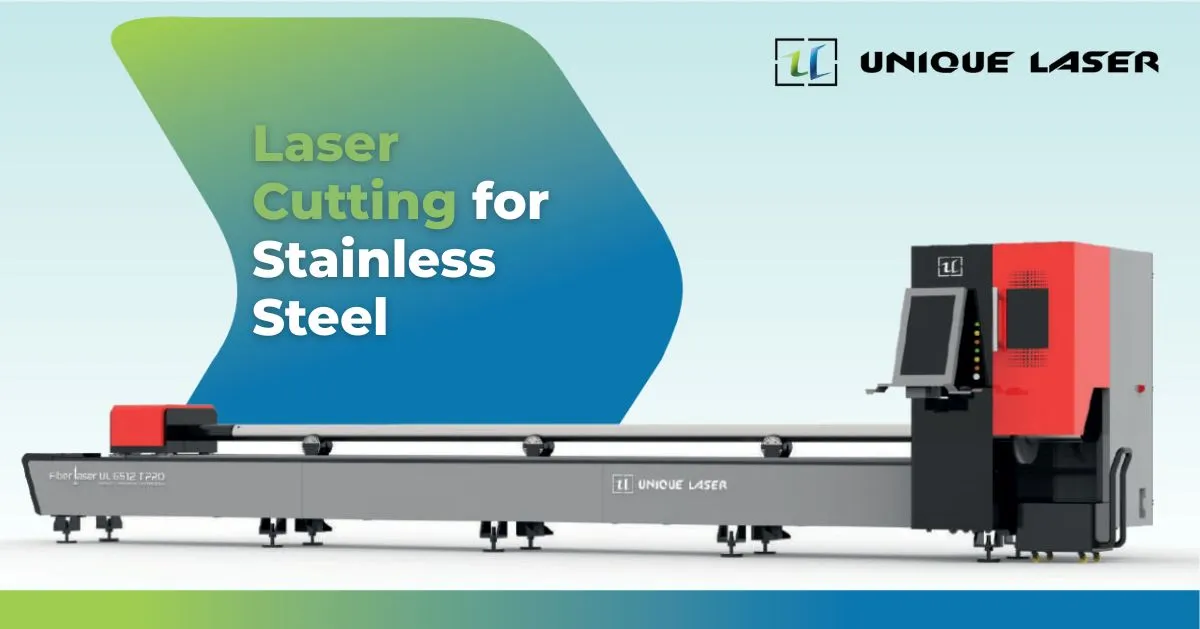
Laser cutting for stainless steel has become one of the most widely used technologies in modern metal fabrication. Industries such as automotive, construction, aerospace, engineering, and industrial equipment manufacturing rely on fiber laser cutting machines to achieve high precision, clean edges, and efficient production.
Traditional cutting methods often struggle to deliver the same level of accuracy and speed. In contrast, laser cutting stainless steel uses a highly focused beam of light to melt and cut metal with exceptional precision. This technology helps manufacturers improve productivity, reduce material waste, and achieve consistent quality in stainless steel components.
According to industrial manufacturing research, laser cutting is widely used in metal processing because it provides high accuracy, minimal heat distortion, and excellent cutting quality for stainless steel and other metals.
What Is Laser Cutting for Stainless Steel?
Laser cutting is a thermal cutting process where a high-powered laser beam is focused on a metal surface to melt, burn, or vaporize the material. The molten metal is then removed by a high-pressure gas, producing a clean and precise cut.
When cutting stainless steel, most manufacturers use fiber laser cutting machines, which are known for their energy efficiency and superior cutting speed.
Key Components of a Stainless-Steel Laser Cutting Machine
- Fiber laser source
- CNC control system
- Laser cutting head
- Assist gas system (nitrogen or oxygen)
- Motion control system
- Cooling system
These components work together to ensure high-precision stainless steel cutting for industrial applications.
Why Laser Cutting Is Ideal for Stainless Steel?
Stainless steel is widely used due to its corrosion resistance, durability, and strength. However, it can be difficult to process using conventional cutting tools. Laser cutting technology provides an efficient solution for processing stainless steel sheets and plates.
1. High Precision Cutting
Laser machines can cut stainless steel with extremely fine tolerances, making them ideal for precision metal fabrication and engineering components.
2. Smooth and Clean Edges
Laser cutting produces smooth, burr-free edges, which reduces the need for secondary finishing operations.
3. Minimal Heat-Affected Zone
Compared to traditional cutting methods, laser cutting generates a smaller heat-affected zone, preserving the structural integrity of stainless steel.
4. Faster Production Speed
Modern fiber laser cutting machines operate at very high speeds, improving manufacturing productivity.
5. Reduced Material Waste
Laser technology optimizes cutting paths and reduces scrap material, making it cost-effective for industrial production.
Laser processing technology is widely adopted in manufacturing due to its efficiency, accuracy, and flexibility.
Types of Laser Machines Used for Stainless Steel Cutting
Fiber Laser Cutting Machines
Fiber laser cutting machines are the most commonly used technology for stainless steel cutting. They offer high beam quality and excellent energy efficiency.
Advantages of fiber laser cutting machines:
- Faster cutting speeds
- Lower power consumption
- High precision cutting
- Long service life
- Low maintenance costs
CO₂ Laser Cutting Machines
CO₂ laser cutting machines were traditionally used for metal cutting but are now less common compared to fiber lasers.
Advantages of CO₂ lasers:
- Effective for thicker materials
- Suitable for non-metal materials
However, fiber laser machines have become the preferred choice for stainless steel cutting due to their higher efficiency and lower operating costs.
Looking for high-precision laser cutting solutions for stainless steel? Contact Us today to explore advanced laser machines designed for efficient industrial manufacturing.
Stainless Steel Laser Cutting Thickness Capability
The cutting thickness depends on the laser power and machine configuration.
| Laser Power | Stainless Steel Cutting Thickness |
| 1 kW | Up to 4 mm |
| 2 kW | Up to 6 mm |
| 3 kW | Up to 10 mm |
| 6 kW | Up to 20 mm |
| 12 kW+ | Up to 40 mm |
Higher power laser machines enable thicker stainless steel cutting while maintaining high precision.
Applications of Stainless Steel Laser Cutting
Laser cutting technology is widely used across multiple industries that require high-quality stainless steel components.
- Automotive Industry: Laser cutting is used to manufacture exhaust systems, brackets, and structural components.
- Industrial Equipment Manufacturing: Many engineering companies rely on laser cutting for machinery parts and industrial components.
- Construction Industry: Laser-cut stainless steel is commonly used for architectural structures, railings, and decorative metalwork.
- Kitchen Equipment Manufacturing: Stainless steel laser cutting is used to produce kitchen appliances, utensils, and food processing equipment.
- Medical Equipment: Laser cutting enables the production of precision surgical instruments and medical devices.
Laser Cutting Process for Stainless Steel
The stainless steel laser cutting process typically involves several steps.
Step 1: Design Preparation
Engineers create CAD designs that define the cutting patterns and dimensions.
Step 2: CNC Programming
The design is converted into CNC instructions for the laser machine.
Step 3: Laser Cutting
The laser beam cuts through stainless steel using assist gases such as nitrogen or oxygen.
Step 4: Quality Inspection
The finished parts are inspected to ensure dimensional accuracy and surface quality.
Advantages of Fiber Laser Cutting Technology
Fiber laser technology has transformed modern metal processing.
- Energy Efficiency: Fiber lasers consume less power compared to traditional laser systems.
- Automation Integration: Laser machines can integrate with robotics and automated production systems.
- High Production Capacity: Laser cutting machines enable high-volume manufacturing with consistent quality.
- Low Maintenance: Fiber laser systems require minimal maintenance due to fewer moving components.
Future of Laser Cutting in Stainless Steel Manufacturing
The global demand for laser cutting stainless steel continues to grow due to advancements in fiber laser technology, automation, and smart manufacturing.
Modern laser systems now support:
- AI-based cutting optimization
- Automated material handling
- Real-time process monitoring
- Industry 4.0 manufacturing integration
These innovations are helping manufacturers achieve higher productivity and improved manufacturing efficiency.
Frequently Asked Questions
Fiber laser cutting machines are considered the best option due to their high efficiency, precision, and speed.
Nitrogen and oxygen are commonly used as assist gases in stainless steel laser cutting processes.
Yes, high-power fiber laser machines can cut stainless steel up to 40 mm thickness, depending on machine power.
Laser cutting offers higher precision, cleaner edges, and better accuracy compared to plasma cutting.
Conclusion
Laser cutting for stainless steel has revolutionized modern metal fabrication by providing precision, speed, and efficiency. With the adoption of fiber laser cutting machines, manufacturers can produce high-quality stainless steel components with minimal waste and lower operational costs.
As industries continue to adopt advanced manufacturing technologies, laser cutting machines will remain an essential tool for precision metal processing and industrial production.