A Laser Welding Machine has transformed modern manufacturing by providing a fast, precise, and efficient method for joining metal components. Industries such as automotive, sheet metal fabrication, electrical panel manufacturing, aerospace, and engineering rely on laser welding technology to produce strong weld joints with minimal distortion and superior consistency.
Unlike conventional welding methods, a laser welding machine uses a highly concentrated beam of laser energy to fuse metal surfaces together. This process enables manufacturers to achieve cleaner weld seams, deeper penetration, faster production speeds, and reduced post-processing requirements. Understanding how a laser welding machine works can help businesses maximize productivity and improve manufacturing quality.
What Is a Laser Welding Machine?
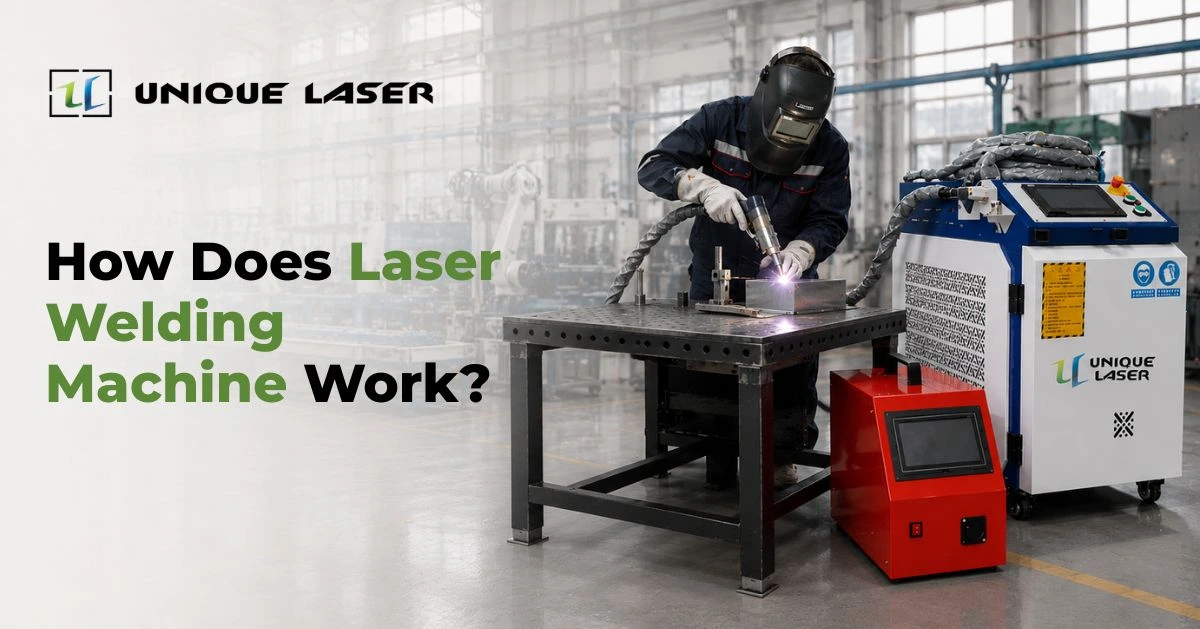
A Laser Welding Machine is an advanced metal joining system that uses a focused laser beam to generate intense heat at a specific location. The concentrated energy melts the base materials, allowing them to fuse together and form a strong weld joint.
Because the heat is applied only where needed, a laser welding machine creates a smaller heat-affected zone compared to traditional welding processes. This helps reduce material distortion and maintain dimensional accuracy.
Common materials welded using a laser welding machine include:
- Stainless steel
- Carbon steel
- Mild steel
- Brass
- Copper
- Galvanized materials
- Precision metal components
How Does a Laser Welding Machine Work?
The working process of a Laser Welding Machine involves several stages that ensure accurate and reliable metal joining.
Laser Generation
The process begins with a fiber laser source that generates a high-energy laser beam. The beam contains concentrated light energy capable of producing the intense heat required for welding.
The stability of the laser source directly influences weld quality, penetration depth, and overall production consistency.
Beam Transmission
After generation, the laser beam travels through optical fibers to the welding head.
This method offers several advantages:
- Minimal power loss
- Stable beam quality
- Efficient energy delivery
- Consistent welding performance
The beam transmission system ensures that the laser energy reaches the welding area with maximum efficiency.
Beam Focusing
The welding head contains precision optics that focus the laser beam onto the joint area.
By concentrating the beam into a very small spot, the system generates extremely high energy density, allowing the material to melt rapidly and accurately.
Precise beam focusing helps improve:
- Weld penetration
- Seam quality
- Welding speed
- Dimensional accuracy
Material Fusion During Laser Welding
Once the focused beam reaches the material surface, intense heat causes the metal to melt.
The molten metal from both components combines and solidifies as it cools, forming a strong weld joint.
This process provides:
- Deep penetration welding
- Strong mechanical strength
- Smooth weld seams
- Minimal distortion
Because a Laser Welding Machine applies heat precisely, surrounding material experiences significantly less thermal stress.
| Laser Welding Stage | Function |
| Laser Generation | Produces concentrated laser energy |
| Beam Transmission | Delivers laser energy through optical fibers |
| Beam Focusing | Concentrates the beam onto the weld joint |
| Material Fusion | Melts and joins metal components |
| Shielding Gas Support | Protects the weld from contamination |
| Controlled Movement | Ensures accurate and repeatable welding |
Why Shielding Gas Is Important?
Most laser welding applications use shielding gases to protect the weld area from oxidation and contamination.
Common shielding gases include:
- Argon
- Nitrogen
- Helium
The benefits of shielding gas include:
- Cleaner weld appearance
- Reduced oxidation
- Improved weld quality
- Better corrosion resistance
Proper shielding gas selection helps a Laser Welding Machine achieve consistent and reliable welding results.
Looking for an advanced laser welding machine? Contact Us today to explore industrial laser welding solutions.
Controlled Movement and Automation
Modern laser welding systems use CNC controls and automated motion systems to guide the welding head along programmed paths.
This allows manufacturers to produce:
- Straight welds
- Circular welds
- Complex weld patterns
- High-volume production runs
Automated movement improves repeatability and reduces dependence on manual operator skill.
Advanced solutions such as the Unique Laser 4 Axis Fiber Laser Welding Machine provide enhanced accuracy and productivity for industrial manufacturing applications.
Advantages of Laser Welding Machine Technology
A Laser Welding Machine offers several advantages over conventional welding methods.
Key benefits include:
- High welding speed
- Deep penetration capability
- Strong weld joints
- Minimal heat distortion
- Reduced post-processing
- Improved weld consistency
- Energy-efficient operation
- Automation compatibility
These advantages make laser welding technology ideal for modern manufacturing environments focused on productivity and quality.
Applications of Laser Welding Machine
A Laser Welding Machine is widely used across various industries.
Common applications include:
- Sheet Metal Fabrication
Used for precision joining of stainless steel and metal fabrication components.
- Automotive Manufacturing
Ideal for welding chassis parts, brackets, structural components, and body panels.
- Engineering and Machinery
Provides strong welds for equipment frames, industrial machinery, and fabricated assemblies.
- Electrical Panel Manufacturing
Ensures clean and accurate welding of enclosures, cabinets, and metal housings.
- Aerospace and Precision Industries
Supports the production of lightweight, high-precision components requiring exceptional weld quality.
Frequently Asked Questions
A laser welding machine is an advanced welding system that uses a focused laser beam to join metal components with high precision, speed, and weld quality.
A laser welding machine works by generating a high-energy laser beam, transmitting it through optical fibers, focusing it onto the weld area, and fusing metal surfaces together.
A laser welding machine can weld stainless steel, carbon steel, mild steel, brass, copper, galvanized materials, and various industrial metal components.
Yes. A laser welding machine typically offers higher welding speeds and reduced post-processing compared to conventional welding methods such as MIG and TIG welding.
Shielding gas protects the weld area from oxidation and contamination, helping improve weld appearance, quality, and corrosion resistance.
Conclusion
A Laser Welding Machine works by generating a concentrated laser beam that precisely melts and fuses metal components together. Through laser generation, beam transmission, beam focusing, material fusion, shielding gas protection, and controlled movement, the technology delivers strong weld joints with exceptional accuracy and consistency. As industries continue to demand higher productivity and superior weld quality, a laser welding machine remains one of the most effective solutions for modern industrial manufacturing.