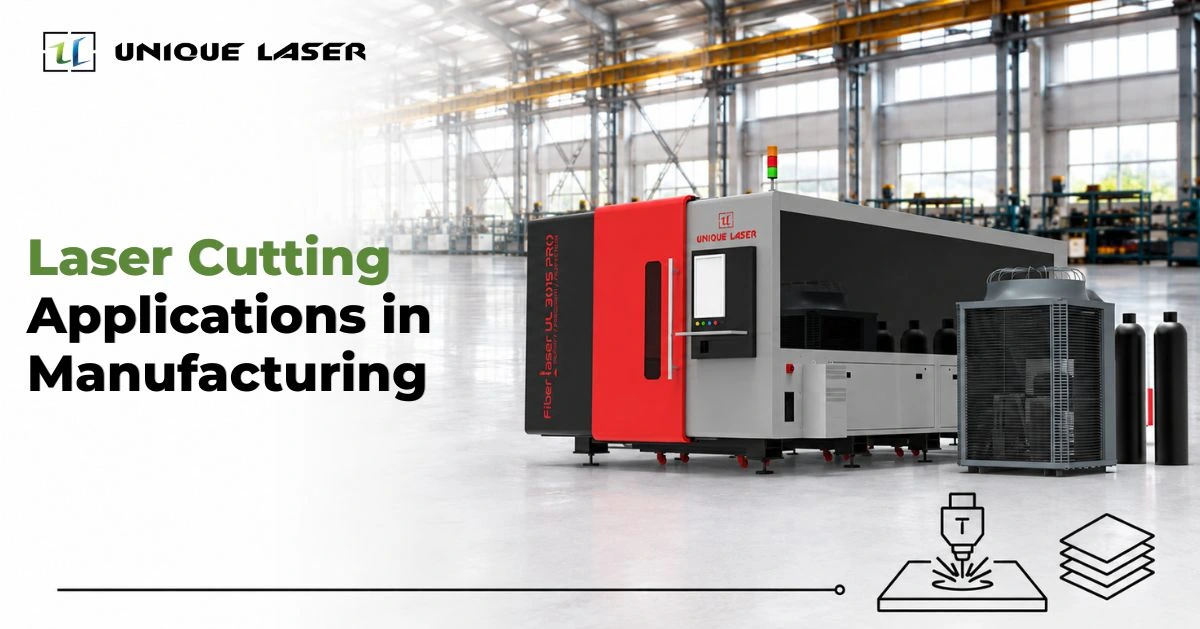
Modern manufacturing requires speed, accuracy, repeatability, and efficient material usage. A Laser Cutting Machine helps manufacturers achieve these requirements by producing precise cuts across different metal materials with minimal mechanical stress. From sheet metal fabrication to automotive components, laser cutting has become an important technology for producing accurate and complex parts.
Why Is Laser Cutting Used in Manufacturing?
Manufacturers increasingly use industrial laser cutting because it combines high cutting speed with precise digital control. Unlike conventional mechanical cutting methods, the process uses a focused laser beam to cut material along programmed paths, reducing physical contact with the workpiece.
This makes precision laser cutting suitable for applications requiring consistent dimensions, clean edges, complex geometries, and repeatable production results.
Key Laser Cutting Applications in Manufacturing
Discover how laser cutting technology supports precision, productivity, and efficiency across modern manufacturing industries.
Sheet Metal Fabrication
Laser cutting for sheet metal is widely used to produce brackets, panels, covers, enclosures, and structural components. In modern fabrication, sheet metal laser cutting enables manufacturers to create precise holes, slots, profiles, and intricate shapes while maintaining consistent dimensions across production batches.
Automotive Manufacturing
In automotive production, laser cutting for automotive parts supports the manufacturing of brackets, panels, structural components, and other precision parts. Computer-controlled automotive laser cutting helps manufacturers maintain accurate geometries and repeatable results for demanding production requirements.
Electrical Panel Manufacturing
Electrical manufacturers use laser cutting for electrical panels to produce enclosures, cabinets, mounting plates, and precise cut-outs. Accurate openings for switches, connectors, displays, and cable routing can improve component fitment and assembly efficiency.
Engineering and Machinery
Laser cutting for engineering components is useful for manufacturing machine parts, brackets, frames, covers, and customized components. For complex production requirements, laser cutting for machine parts allows manufacturers to program different cutting patterns for both standard and customized component designs.
Aerospace Components
Aerospace manufacturing demands accurate components and controlled production processes. Laser cutting for aerospace components can support the production of lightweight and intricate metal parts where dimensional consistency and clean cutting are important.
Furniture and Decorative Products
Manufacturers producing metal furniture, partitions, decorative panels, and architectural components can use laser cutting for furniture to create detailed patterns and customized designs. Digital programming makes design changes easier without requiring dedicated mechanical tooling.
What Materials Can Laser Cutting Machines Process?
Modern fiber laser cutting systems are commonly used for materials such as:
- Mild and carbon steel
- Stainless steel
- Aluminum
- Brass
- Copper
- Galvanized sheets
Material thickness and cutting performance depend on laser power, material properties, assist gas, cutting parameters, and machine configuration.
How Does Laser Cutting Improve Manufacturing?
A well-configured industrial laser cutting machine can help manufacturers reduce setup requirements, produce complex profiles, minimize material waste, and maintain consistent cutting quality. Digital programming also makes it easier to repeat designs and adjust production requirements.
For high-volume or varied production, laser cutting solutions can improve workflow flexibility while reducing dependence on multiple conventional cutting operations.
Looking for a reliable Laser Cutting Machine? Contact Us for precise, efficient, and consistent industrial cutting solutions.
How to Choose a Laser Cutting Machine for Manufacturing?
Choosing the right laser cutting machine for industrial use depends on material types, required thickness, sheet or tube dimensions, production volume, cutting speed, accuracy, and automation requirements. Manufacturers should also consider machine configuration, maintenance support, software, and after-sales technical assistance.
How Does Laser Cutting Support Production Efficiency?
Laser cutting technology can streamline production by combining cutting, digital programming, and automated machine movement in one process. Manufacturers can switch between different component designs through software, reducing the need for dedicated tooling and making production changes easier.
For businesses handling varied orders or repeated component production, a high-speed laser cutting machine can help maintain consistent output while reducing manual intervention and supporting more efficient production workflows.
What Are the Benefits of Laser Cutting for Manufacturers?
Beyond cutting accuracy, industrial laser cutting offers advantages that can improve overall manufacturing performance. The non-contact process reduces mechanical stress on components, while narrow kerf widths can support efficient material utilization.
Other benefits include the ability to produce complex profiles, repeat designs accurately, process multiple metal types, and integrate the equipment with modern manufacturing systems. These capabilities make laser cutting suitable for manufacturers seeking greater flexibility and consistent production quality.
Frequently Asked Questions
Major applications include sheet metal fabrication, automotive components, electrical panels, engineering parts, aerospace components, furniture, and decorative metalwork.
It can process materials such as mild steel, carbon steel, stainless steel, aluminum, brass, copper, and galvanized sheets, depending on machine specifications.
It provides precise, repeatable cutting with fast processing, clean edges, flexible digital programming, and reduced mechanical stress.
Yes. Computer-controlled movement allows laser cutting technology to produce intricate profiles, holes, slots, and customized geometries.
Narrow kerf widths and optimized cutting paths can help manufacturers use sheet material efficiently and reduce unnecessary scrap.
Conclusion
The growing use of Laser Cutting Machine technology reflects the need for faster, more accurate, and flexible manufacturing processes. From fabrication and automotive production to engineering, electrical, aerospace, and furniture applications, laser cutting provides manufacturers with a versatile method for producing consistent metal components and complex designs.