Modern manufacturing demands more than just strong welds—it requires speed, precision, consistency, and cost efficiency. This is why Laser Welding Machines have become an essential part of industries such as automotive, sheet metal fabrication, engineering, electrical equipment, and metal furniture manufacturing. By using advanced fiber laser technology, these machines produce high-quality welds with minimal heat distortion, allowing manufacturers to improve productivity without compromising quality.
Compared to conventional welding methods, fiber laser technology offers cleaner weld seams, faster processing speeds, and greater repeatability. Whether you’re producing complex industrial components or fabricating stainless steel products, investing in laser welding machines can significantly enhance manufacturing performance.
What Are Fiber Laser Welding Machines?
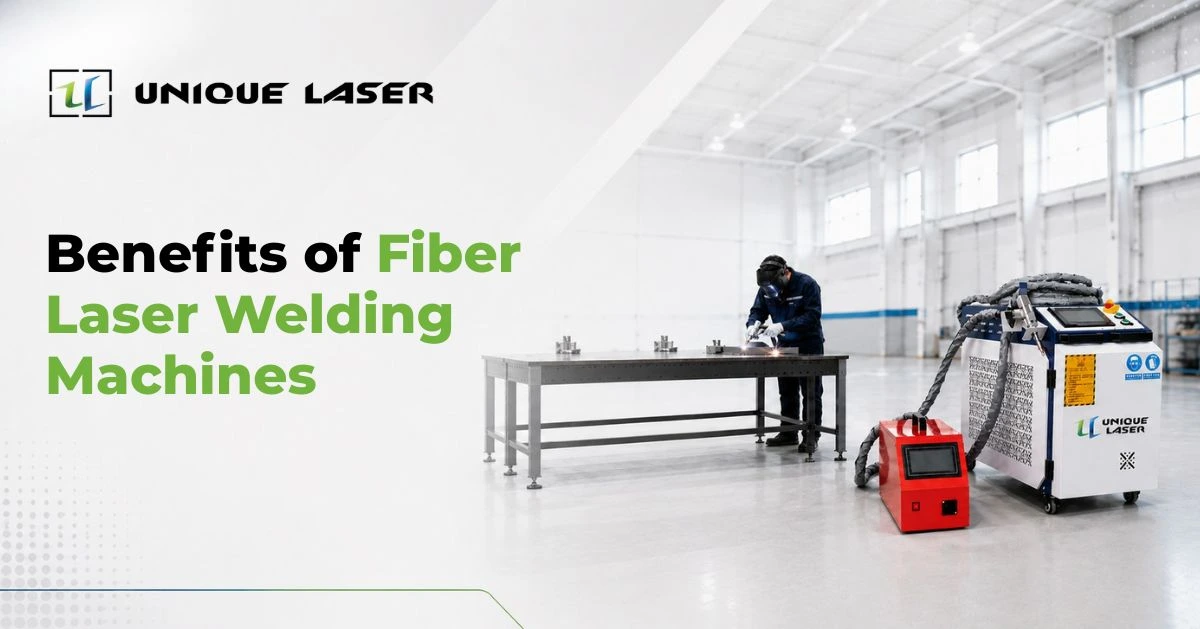
Laser welding machines use a concentrated laser beam to join metal components with exceptional precision. The focused beam generates intense heat at the welding point, creating deep and narrow welds while minimizing the heat-affected zone.
Compared to conventional welding methods, Laser Welding Machines provide better energy efficiency, faster processing speeds, improved process control, and cleaner weld seams. These advantages make them an ideal choice for manufacturers looking to increase production capacity, enhance weld quality, and maintain consistent results across a wide range of industrial applications.
High Welding Precision and Consistent Quality
One of the biggest advantages of Laser Welding Machines is their ability to produce highly accurate and repeatable welds.
The focused laser beam allows manufacturers to achieve:
- Precise weld placement
- Uniform weld seams
- Strong joint integrity
- Consistent production quality
This level of precision is especially valuable in industries where dimensional accuracy and product reliability are critical.
Faster Production Speeds
Manufacturers are constantly looking for ways to shorten production cycles, and Laser Welding Machines help achieve this by performing welds significantly faster than many conventional methods.
High-speed welding enables businesses to:
- Increase daily production output
- Reduce manufacturing lead times
- Improve workflow efficiency
- Meet demanding production schedules
Faster processing also allows manufacturers to respond more effectively to changing customer requirements.
Minimal Heat Distortion
Traditional welding methods often expose surrounding material to excessive heat, which can cause warping and dimensional changes.
Fiber Laser Welding Machines concentrate heat only where it is required, resulting in:
- Smaller heat-affected zones
- Reduced material deformation
- Improved dimensional stability
- Better surface finish
This makes them ideal for welding precision components and thin metal sections.
Cleaner Weld Seams with Less Post-Processing
A major benefit of Laser Welding Machines is the quality of the finished weld.
The process creates:
- Smooth weld seams
- Minimal spatter
- Reduced weld flash
- Better aesthetic appearance
As a result, manufacturers spend less time grinding, polishing, or performing secondary finishing operations, reducing both labor costs and production time.
| Benefit | Manufacturing Advantage |
| High Precision | Improved product quality |
| Fast Welding Speed | Higher production output |
| Low Heat Distortion | Better dimensional accuracy |
| Clean Weld Seams | Less post-processing |
| Automation Ready | Consistent large-scale production |
| Low Maintenance | Reduced operating costs |
Energy-Efficient Operation
Fiber Laser Welding Machines convert electrical energy into laser energy more efficiently than many traditional welding technologies.
This helps manufacturers:
- Reduce power consumption
- Lower operating costs
- Improve energy efficiency
- Support sustainable manufacturing practices
Over time, these savings contribute to a stronger return on investment.
Flexible Welding for Various Applications
Modern Laser Welding Machines are designed to handle a wide variety of welding tasks across different industries.
They are suitable for:
- Stainless steel fabrication
- Carbon steel components
- Mild steel assemblies
- Brass and copper parts
- Galvanized materials
- Precision engineering components
Whether using a handheld system for custom fabrication or an automated 4-axis solution for repetitive production, manufacturers can achieve reliable welding results across multiple applications.
Looking for advanced laser welding machines? Contact us today to explore industrial fiber laser welding solutions designed for modern manufacturing.
Easy Integration with Automated Manufacturing
As industries adopt Industry 4.0 technologies, Laser Welding Machines have become an important part of automated production environments.
Advanced systems can integrate with:
- CNC Controls
- Robotic welding cells
- Automated production lines
- Smart manufacturing systems
Automation improves process consistency while reducing manual intervention and production errors.
Long-Term Cost Benefits
Although the initial investment may be higher than conventional equipment, Laser Welding Machines provide long-term financial benefits.
These include:
- Lower maintenance requirements
- Reduced consumable usage
- Faster production cycles
- Less rework
- Improved product quality
- Higher equipment reliability
For manufacturers focused on long-term efficiency, fiber laser welding technology offers excellent value.
Frequently Asked Questions
Laser welding machines provide higher precision, faster welding speeds, cleaner weld seams, and reduced heat distortion compared to many conventional welding processes.
Industries including automotive, sheet metal fabrication, engineering, electrical manufacturing, medical devices, aerospace, and furniture production commonly use laser welding machines.
Yes. Laser welding machines can weld stainless steel, carbon steel, mild steel, brass, copper, galvanized materials, and various industrial metal components.
Yes. Modern laser welding machines can be integrated with CNC systems, robotic automation, and Industry 4.0 manufacturing environments.
Fiber laser welding machines generally require less maintenance than many traditional welding systems due to their efficient design and fewer consumable components.
Conclusion
Modern manufacturing continues to demand higher precision, faster production, and consistent quality, making Laser Welding Machines an essential solution for industrial applications. Their ability to produce strong weld joints, minimize heat distortion, and support automated production helps manufacturers improve efficiency while maintaining high-quality standards. By investing in advanced fiber laser technology, businesses can reduce operational costs, increase productivity, and achieve reliable welding performance that supports long-term manufacturing success.