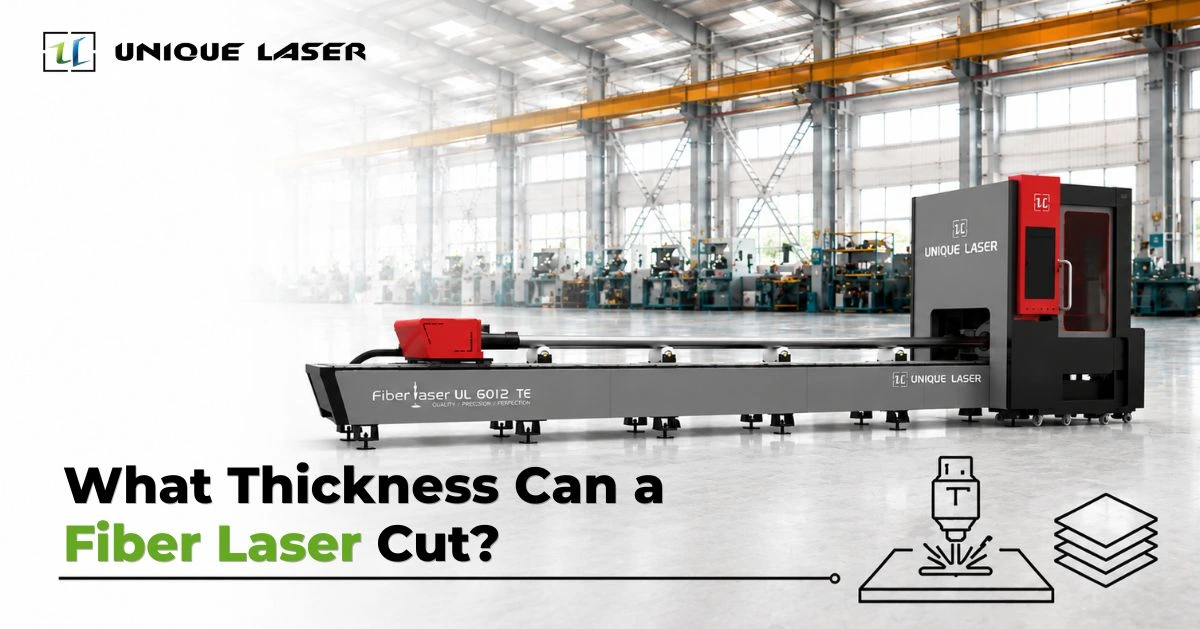
Cutting thickness is one of the most important factors manufacturers consider when selecting laser cutting equipment. The maximum thickness that can be processed depends on several factors, including laser power, material type, cutting speed, assist gas, focus position, and machine configuration. A modern Laser Cutting Machine can process materials ranging from thin sheets to considerably thicker metal plates while maintaining accurate cutting and consistent edge quality when the correct parameters are used.
Understanding these factors helps manufacturers choose suitable equipment for their production requirements and avoid selecting a machine with insufficient cutting capacity.
What Determines Fiber Laser Cutting Thickness?
The cutting thickness of a fiber laser depends on more than the laser source power. Different materials respond differently to laser energy, while cutting speed and process parameters also influence the final result.
Important factors include:
- Laser power
- Material type
- Material thickness
- Cutting speed
- Assist gas
- Focus position
- Nozzle size
- Cutting head configuration
- Material surface condition
- Required edge quality
A suitable combination of these parameters allows manufacturers to achieve stable cutting performance across different material thicknesses.
How Thick Can a Fiber Laser Cut?
Laser power generally influences the thickness range that can be processed. Higher-power systems can handle thicker materials and support faster production, although actual cutting capability varies according to material type, machine configuration, assist gas, and required cut quality.
Typical applications can be broadly considered as follows:
| Laser Power | Typical Cutting Application |
| 1 kW | Thin-sheet and light fabrication |
| 1.5 kW | General sheet-metal applications |
| 2 kW | Medium-thickness metal processing |
| 3 kW | Medium and heavier fabrication |
| 6 kW | Higher-thickness industrial cutting |
| 12 kW and above | Heavy-duty and high-productivity applications |
These ranges are general production guidelines rather than fixed maximum thickness limits. Manufacturers should evaluate the machine’s tested cutting capacity for the specific material and thickness they intend to process.
Maximum Cutting Thickness for Different Metals
Different metals require different cutting parameters because their thermal and reflective properties vary.
Mild Steel
Mild steel is widely processed using fiber laser technology and can be cut across a broad range of thicknesses. Higher laser power allows manufacturers to process thicker plates while maintaining suitable cutting speeds and edge quality.
Stainless Steel
Stainless steel requires carefully controlled power, focus, speed, and assist gas settings. Proper parameter selection helps produce clean edges and reduces dross formation when processing thicker sheets.
Aluminum
Aluminum has high thermal conductivity and therefore requires appropriate cutting parameters to maintain stable heat input. Correct focus and assist gas settings are particularly important for achieving consistent results.
Brass
Brass can be processed with fiber laser technology, although its reflective characteristics require suitable equipment and carefully optimized parameters. Machine configuration and laser source selection become increasingly important for reliable production.
Copper
Copper is highly reflective and conducts heat efficiently, making it more demanding to cut than many conventional metals. Appropriate laser technology, power, and process settings are essential for maintaining reliable cutting performance.
Does Laser Power Determine Cutting Thickness?
Laser power is an important factor, but it does not independently determine the maximum cutting thickness. Increasing power generally provides greater cutting capacity because more laser energy is available to melt and remove material.
However, a higher-power Laser Cutting Machine still requires appropriate cutting speed, focus position, assist gas, nozzle selection, and material-specific parameters. Using excessive power without proper parameter optimization can negatively affect edge quality and increase operating costs.
Therefore, manufacturers should select laser power according to their actual material thickness, production volume, and required cutting quality rather than choosing the highest available power.
How Cutting Parameters Affect Thickness?
Correct parameter selection is essential when processing thicker materials.
Cutting Speed
Cutting speed must be balanced with material thickness and laser power. Excessive speed may result in incomplete penetration, while excessively slow cutting can increase heat input and affect edge quality.
Laser Power
Higher power can support thicker-material processing, but the appropriate setting depends on the material and desired production performance.
Focus Position
Accurate focus positioning concentrates the laser energy effectively within the material. Incorrect focus can cause incomplete cutting, rough edges, or excessive dross.
Assist Gas Pressure
Assist gas removes molten material from the cutting zone. Proper gas pressure helps improve penetration, edge quality, and cutting stability.
Nozzle Selection
The correct nozzle size and condition help maintain stable gas flow and consistent cutting performance. Damaged or contaminated nozzles can negatively affect cut quality.
Looking for a reliable Laser Cutting Machine? Contact Us for precise, efficient, and consistent industrial cutting solutions.
Can a Fiber Laser Cut Thick Metal?
Yes, fiber laser systems can cut thick metal, particularly when the machine has sufficient laser power and the process parameters are correctly optimized. However, there is an important difference between technically cutting a material and achieving production-quality results at that thickness.
When processing thicker plates, manufacturers need to consider:
- Required edge quality
- Cutting speed
- Piercing performance
- Assist gas consumption
- Heat generation
- Material consistency
- Machine power
- Production volume
For demanding applications, selecting equipment based on actual production requirements is more reliable than relying only on a stated maximum cutting thickness.
Choosing the Right Fiber Laser Cutting Machine
Manufacturers should determine their expected material thickness before selecting equipment. A machine intended primarily for thin-sheet production may not be suitable for regular heavy-plate processing.
Important selection factors include:
- Maximum material thickness
- Common material types
- Required laser power
- Working area
- Cutting speed
- Production volume
- Automation requirements
- Software capabilities
- Maintenance support
- Future production requirements
The Fiber Laser Cutting Machine configuration, for example, can be considered when selecting a suitable working area and machine format, but its cutting thickness still depends on the installed laser power, material, and process parameters.
Buyers comparing Fiber Laser Cutting Machine Price in India should therefore evaluate cutting capacity and production requirements alongside the initial machine investment.
How to Improve Cutting Performance at Higher Thicknesses?
Maintaining consistent performance becomes increasingly important when cutting thicker materials.
Manufacturers can improve results by:
- Keeping protective lenses clean
- Inspecting nozzles regularly
- Maintaining correct focus calibration
- Selecting suitable assist gas
- Optimizing cutting speed
- Monitoring gas pressure
- Using appropriate laser power
- Maintaining the cooling system
- Following preventive maintenance schedules
Regular maintenance helps ensure that the machine continues delivering stable cutting performance throughout its operating life.
Frequently Asked Questions
The maximum thickness depends on laser power, material type, assist gas, cutting parameters, machine configuration, and required edge quality. Higher-power systems generally support thicker-material applications.
A suitable high-power fiber laser system can process 20 mm steel, but the actual performance depends on the steel type, laser power, assist gas, machine configuration, and required cutting quality.
There is no single maximum thickness applicable to every machine. Cutting capability varies significantly according to laser power, material, process parameters, and machine design.
Higher laser power generally increases cutting capacity, but power alone does not determine the result. Focus, speed, assist gas, nozzle selection, and material properties also affect cutting performance.
Yes. Fiber laser systems are widely used for cutting stainless steel and aluminum, provided the machine and cutting parameters are appropriately selected for the material and thickness.
Conclusion
The thickness a fiber laser can cut depends on a combination of laser power, material properties, machine configuration, assist gas, focus position, cutting speed, and other process parameters. Selecting equipment based only on maximum advertised thickness can lead to unsuitable production performance. Manufacturers should instead evaluate their regular material types, thickness requirements, production volume, and desired edge quality. Choosing the right Laser Cutting Machine and maintaining optimized cutting conditions helps achieve reliable performance, efficient material processing, and consistent results across industrial applications.