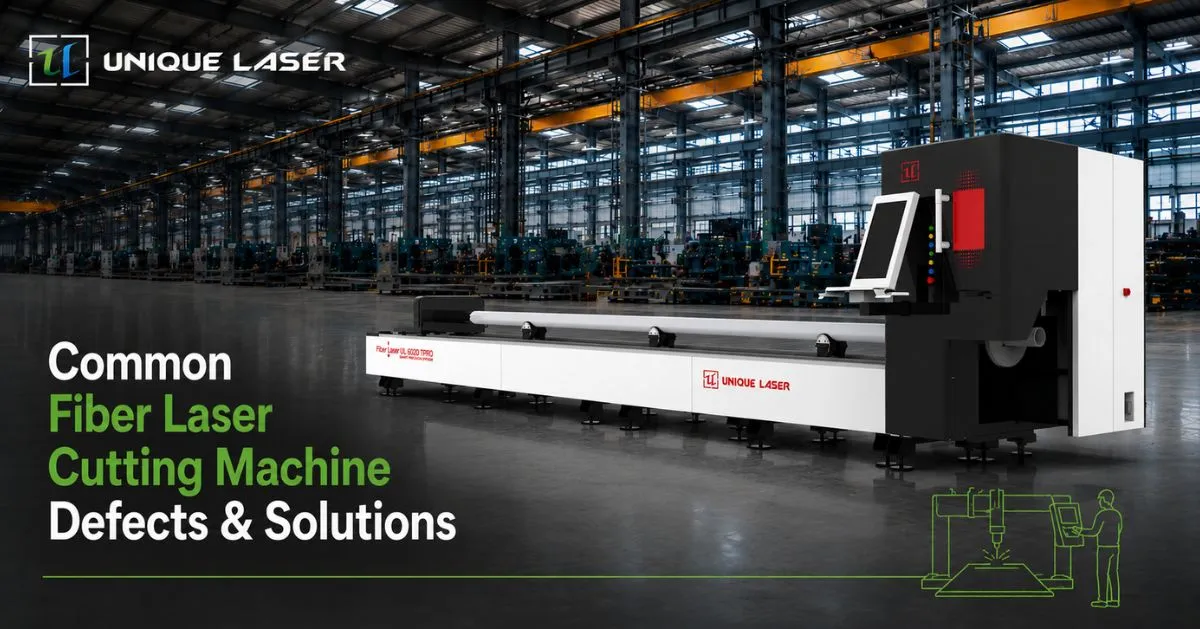
Consistent cut quality is essential in modern metal fabrication, where precision, speed, and material utilization directly affect production efficiency. Even with advanced equipment, a Fiber Laser Cutting Machine may occasionally produce defects due to incorrect process parameters, worn consumables, material variations, or inadequate maintenance. Identifying these issues early and applying the right corrective measures helps manufacturers reduce scrap, minimize downtime, and maintain high-quality output.
This guide explains the most common fiber laser cutting defects, their causes, practical solutions, and preventive measures to keep your production running smoothly.
What are Fiber Laser Cutting Machine Defects?
Cutting defects are imperfections that appear during the laser cutting process and affect the quality, dimensional accuracy, or appearance of the finished component produced by a Fiber Laser Cutting Machine. These defects may increase material waste, require additional finishing operations, or reduce overall productivity if not corrected promptly.
Common defects include:
- Burr formation
- Rough or uneven cut edges
- Incomplete cutting
- Dross attachment
- Burn marks
- Excessive kerf width
- Corner melting
- Material warping
Understanding why these issues occur is the first step toward achieving consistent cutting performance.
Why Do Cutting Defects Occur?
Several process variables influence cut quality. Even a minor deviation in machine settings can lead to noticeable defects.
Common causes include:
- Incorrect laser power
- Improper cutting speed
- Incorrect focus position
- Inadequate assist gas pressure
- Dirty protective lenses
- Damaged cutting nozzles
- Poor material quality
- Lack of routine maintenance
- Incorrect machine calibration
Regular monitoring and parameter optimization help eliminate many of these problems before they affect production.
Common Fiber Laser Cutting Machine Defects and Their Solutions
During operation, a Fiber Laser Cutting Machine may develop cutting defects because of incorrect machine settings, worn consumables, poor material quality, or inadequate maintenance. Understanding these problems and their solutions helps improve cut quality, reduce waste, and maintain consistent production.
Burr Formation
Burrs are small metal projections that remain attached to the lower edge of a cut component.
Possible Causes
- Low laser power
- Slow cutting speed
- Incorrect focus position
- Low assist gas pressure
- Worn nozzle
Recommended Solutions
- Increase laser power where appropriate.
- Optimize cutting speed for the material.
- Recalibrate the focal position.
- Maintain the correct assist gas pressure.
- Replace damaged or worn nozzles.
Impact
Burrs increase finishing time and may require secondary deburring operations.
Rough Cut Edges
Rough or wavy edges reduce surface quality and can affect downstream fabrication processes.
Possible Causes
- Excessive cutting speed
- Dirty optical components
- Incorrect focus settings
- Machine vibration
Recommended Solutions
- Reduce cutting speed.
- Clean protective lenses regularly.
- Verify focus calibration.
- Inspect guide rails and machine stability.
Impact
Poor edge quality can make welding, bending, and assembly more difficult.
Incomplete Cutting
Incomplete cutting occurs when the laser beam fails to penetrate the material completely.
Possible Causes
- Insufficient laser power
- High cutting speed
- Incorrect focus position
- Material thickness exceeding machine capacity
Recommended Solutions
- Increase laser power within recommended limits.
- Reduce cutting speed.
- Adjust the focus point accurately.
- Confirm the machine is suitable for the material thickness.
Impact
Incomplete cuts increase scrap rates and interrupt production.
Dross Attachment
Molten material that solidifies beneath the cut edge is known as dross.
Possible Causes
- Low assist gas pressure
- Incorrect cutting parameters
- Poor focus alignment
Recommended Solutions
- Increase gas pressure.
- Optimize cutting speed.
- Recalibrate the focal position.
Impact
Additional cleaning increases production time and operating costs.
Burn Marks
Excessive heat can discolor the material around the cut edge.
Possible Causes
- High laser power
- Slow cutting speed
- Poor gas flow
Recommended Solutions
- Reduce laser power.
- Increase cutting speed.
- Ensure consistent assist gas delivery.
Impact
Burn marks reduce appearance and may require additional finishing.
Wide Kerf Width
A wider kerf affects dimensional accuracy and material utilization.
Possible Causes
- Incorrect focus position
- Large nozzle diameter
- Excessive laser power
Recommended Solutions
- Adjust the focus accurately.
- Select the appropriate nozzle.
- Optimize cutting parameters.
Impact
Reduced precision and higher material consumption.
Corner Melting
Heat accumulation at sharp corners may cause excessive melting.
Possible Causes
- High laser power
- Slow corner speed
- Improper motion programming
Recommended Solutions
- Enable corner power reduction.
- Improve acceleration settings.
- Optimize the cutting path.
Impact
Reduced dimensional accuracy and poor visual finish.
Material Warping
Thin sheets may deform due to excessive heat input.
Possible Causes
- High heat concentration
- Poor sheet support
- Improper clamping
Recommended Solutions
- Increase cutting speed.
- Support the material correctly.
- Improve nesting strategies.
- Secure the workpiece properly.
Impact
Warped components often require replacement, increasing material waste.
Fiber Laser Cutting Machine Troubleshooting Guide
| Defect | Common Cause | Recommended Solution |
| Burr Formation | Low power, poor gas pressure | Increase power and optimize gas flow |
| Rough Edges | Dirty optics, excessive speed | Clean lenses and adjust speed |
| Incomplete Cutting | Low power, incorrect focus | Increase power and recalibrate focus |
| Dross Attachment | Low gas pressure | Optimize gas pressure and focus |
| Burn Marks | Excessive heat | Reduce power and increase speed |
| Wide Kerf | Incorrect focus | Adjust focal position |
| Corner Melting | High corner heat | Optimize motion control |
| Material Warping | Excessive heat input | Improve support and cutting parameters |
Preventing Fiber Laser Cutting Machine Defects
Preventive maintenance is one of the most effective ways to maintain consistent cut quality and keep a Fiber Laser Cutting Machine performing efficiently.
Daily maintenance should include:
- Cleaning protective lenses
- Inspecting nozzles
- Checking assist gas supply
- Verifying focus calibration
Weekly maintenance should include:
- Cleaning guide rails
- Inspecting the cooling system
- Checking cutting head alignment
Monthly maintenance should include:
- Machine accuracy verification
- Inspection of optical components
- Performance evaluation and parameter review
A proactive maintenance schedule reduces unexpected downtime and helps maintain reliable production quality.
Looking for a reliable Fiber Laser Cutting Machine? Contact Us to explore advanced laser cutting solutions designed for modern manufacturing applications.
Choosing the Right Fiber Laser Cutting Machine
Equipment quality plays a significant role in minimizing cutting defects. Choosing the right Fiber Laser Cutting Machine with intelligent technologies improves consistency and simplifies operation.
- Automatic focus adjustment
- Intelligent nozzle calibration
- Stable motion control
- Process monitoring
- Optimized cutting parameter libraries
- Reliable technical support
These capabilities help manufacturers achieve higher productivity while maintaining excellent cut quality across different materials.
Frequently Asked Questions
Common defects include burr formation, rough edges, incomplete cuts, dross attachment, burn marks, excessive kerf width, corner melting, and material warping.
Optimizing laser power, assist gas pressure, cutting speed, and focus position while using a properly maintained nozzle helps minimize burr formation.
Dross usually forms because of insufficient gas pressure, incorrect focus settings, or improper cutting parameters.
Basic inspections should be performed daily, with more detailed maintenance carried out weekly and monthly according to the manufacturer’s recommendations.
Yes. Surface condition, material composition, thickness consistency, and cleanliness all influence cut quality and overall machine performance.
Conclusion
Reliable production depends on identifying cutting defects early and addressing their root causes before they impact product quality, production efficiency, or operating costs. Regular machine maintenance, proper process parameter optimization, quality consumables, and skilled operator practices all play an important role in achieving consistent cutting results. Investing in an advanced Fiber Laser Cutting Machine equipped with intelligent control features, stable motion systems, and precise focus technology further improves cut quality, minimizes material waste, reduces downtime, and enhances overall manufacturing performance. By combining preventive maintenance with the right equipment and optimized cutting parameters, manufacturers can achieve higher productivity, longer machine life, and consistently accurate results across a wide range of metal fabrication applications.